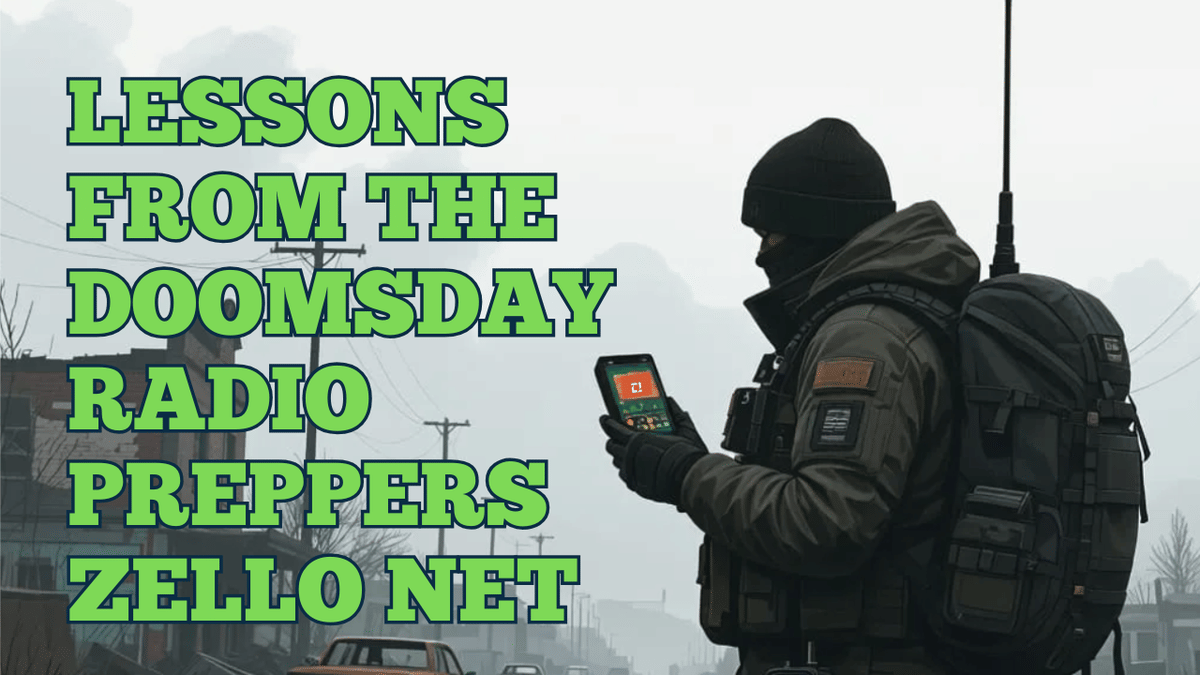
Most people think radio chatter is noise until something in their life depends on it. I was reminded of that this week when I joined the Doomsday Radio Preppers Zello Net. The group was sharp, friendly, and full of people trying to solve the same problem I’ve spent most of my life working on: how to keep a family connected when the phones quit.
The questions came fast. GMRS range. Repeaters. Antenna choices. Homemade repeater rigs. Off-grid valleys. Spouses driving out of cell coverage. Kids learning radios. Every scenario pointed to the same truth. A family either has a plan or it guesses. And guessing is not leadership.
After the call, I wrote down the lessons that stood out. These reflect thirty years of watching families try to communicate under pressure.
Lesson 1: Antennas decide the outcome
A radio is only as good as the wire above it. That theme came up several times on the net. Some were running stock antennas and wondering why their range never changed. Others were using good radios with lossy coax and losing half their power before it left the house.
The pattern is simple. Height. Feed line. Antenna quality. Those three things make or break GMRS.
LMR-400 or an equivalent cable is the starting point once you get above twenty feet. A good mobile with a proper quarter-wave antenna will outwork a handheld every time. A fixed antenna at thirty feet changes the whole picture.
Range is physics, not hope.
Lesson 2: Repeaters are not optional
GMRS is a local service. A two-watt handheld indoors will not cover a county. Terrain eats UHF alive. Woods and hills cut range fast.
If you want dependable communication between home and the places your family moves during the day, a repeater must be part of your plan. Whether you own it or borrow it is secondary. What matters is height, quality, and consistency.
Build relationships with repeater owners. Study their coverage. Know their weaknesses. And if you have the land, the budget, and the need, you can build one with a few trusted friends.
Every real communication plan includes a repeater. Without one, your world gets small.
Lesson 3: DIY repeaters work, but you need to respect the limits
One caller pulled a clever move. Two handhelds, a duplexer, a rope, and a duffel bag. He launched it into a tree to get height. It worked well enough to extend his reach.
But the bigger lesson mattered more. Two antennas placed too close together will overload each other. You need separation. You need height. You need decent coax. Even homemade repeaters obey the same physics the commercial world follows.
If your family depends on GMRS during emergencies, your gear must be built on real engineering, not wishful thinking.
Lesson 4: Skill beats equipment
A lot of people chase more wattage. They chase brand names. They chase the next radio that promises “more range.”
The truth is simple. Radios don’t solve communication problems. Skills do.
A person who understands terrain, timing, and antenna placement will outperform someone with better gear but no structure.
A child with a clear protocol can reach a parent across town with a simple handheld. A parent with a fifty-watt radio and no plan may struggle to reach the driveway.
Tools matter, but training matters more.
Lesson 5: Kids learn this faster than you think
One dad on the net talked about his fourteen-year-old son running repeaters, switching channels, and handling call signs with ease. He learned it fast, and that didn’t surprise me.
Kids pick up radio work because it’s simple and direct. Push. Talk. Listen. Respond. It gives them a role in the family’s safety, and they rise to it.
My own five kids grew up learning radios on the farm, on the road, and in storms. They know what to do because they practiced it, not because they memorized theory.
Families overlook this. They shouldn’t.
Lesson 6: The hunger for clarity is growing
Most of the folks on that net are just like me. They want to know their family can reach them when the phones quit. That’s the real driver behind all the questions. Not fear. Not doomer-bunker-builders. Just the simple responsibility of staying connected to the people who count. And despite the name, the net wasn’t doomy at all. It was good people having a good time, learning together, and trying to get a little better at something that matters.
People want a plan that works. They want steps they can follow without drowning in jargon. They want to know what holds up when the grid goes sideways or a storm knocks out the towers. That desire for clarity is the same reason I teach. A working plan is worth more than a bucket of radios.
Final Thoughts
I’ve been working on family communication planning for more than two decades, and I can say this with confidence: the real test of a plan isn’t how it looks on paper. It’s how it performs when the pressure shows up. Nets like this reveal there are regular folks out there looking for solutions-just like you. They also show what people fear, what they’re trying to solve, and where they’re already strong.
I’ll be honest. The group name threw me off before I joined. I expected something different. What I found was a room full of sharp, capable people who care about their families and enjoy learning together. Good leadership. Good questions. Good energy. It was a pleasant surprise, and a solid reminder not to judge a group by its banner.
Remember: You don’t rise to the level of your equipment. You fall to the level of your plan.
If your group hosts a net or runs a podcast and you’d like to dig deeper into family communication planning, I’m glad to join you. Teaching this material is part of my work, and I’m always open to conversations that help folks get their systems in order. The Doomsday Radio Preppers Net has a strong community, and you can follow their work here:
https://www.facebook.com/share/g/1DDnf3UYaD/
About the Author
Caleb Nelson (K4CDN) is a husband, father of five, and the founder of the Family Connect System—a practical, family-first approach to emergency communication. A veteran of FM radio and a licensed Amateur Radio Operator, Caleb draws on decades of real-world experience, including nearly ten years in the professional fire service as an Engineer and EMT.
He and his wife of over 25 years, Carla, homeschool their children and run a small business together—often with the help of their two loyal Goldendoodles. Whether he's writing, teaching, or talking on the airwaves, Caleb’s heart to serve and protect families is at the center of everything he does.
More from Caleb: